 Ankit Gandhi
Understand XR Using AR
An AR-enhanced educational book that introduces Extended Reality in the simplest possible way.
Project at MIT Institute of Design.
Project description
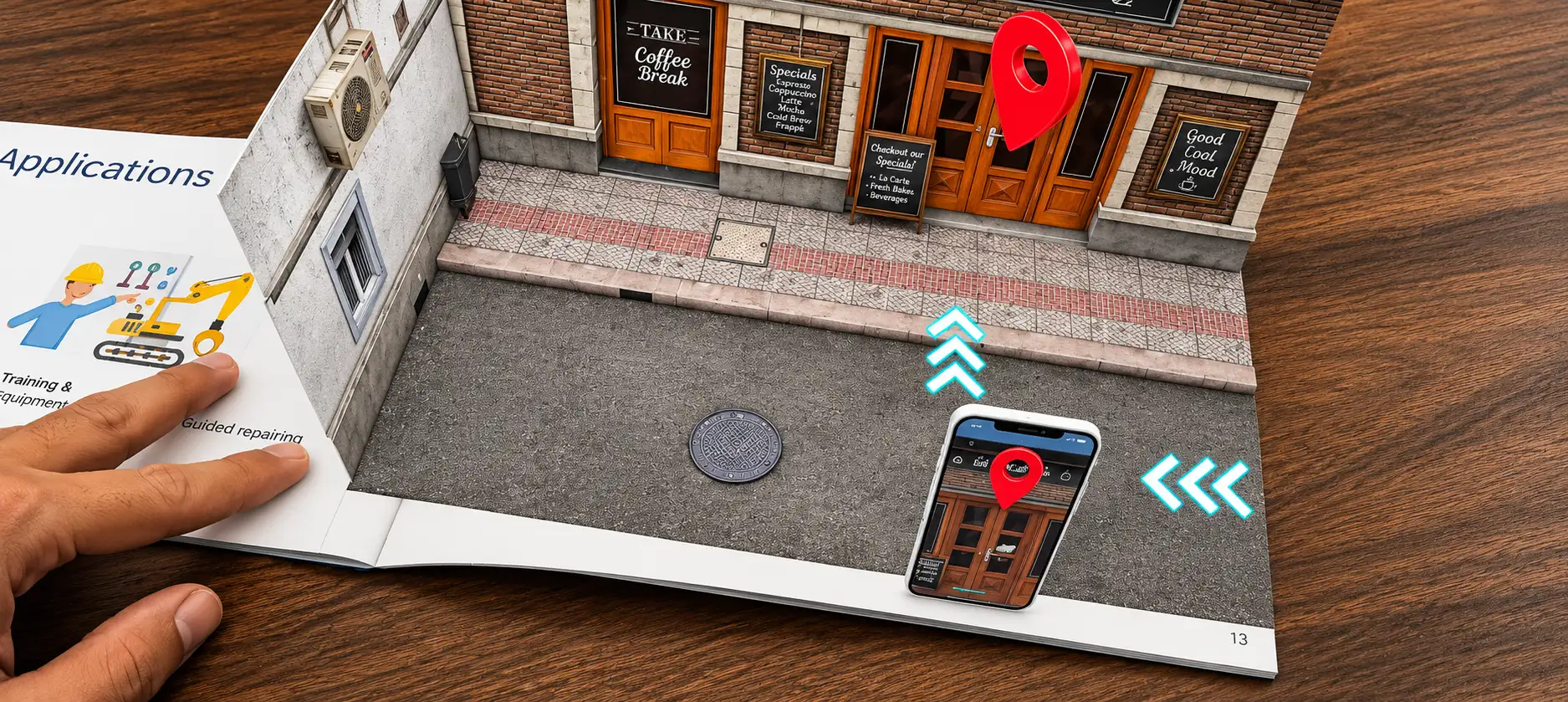
Understand XR Using AR is an AR-enhanced educational book designed to introduce Extended Reality in the simplest possible way.
The project began with a question: How can XR be explained to someone with no prior knowledge regardless of age, background or technical familiarity?
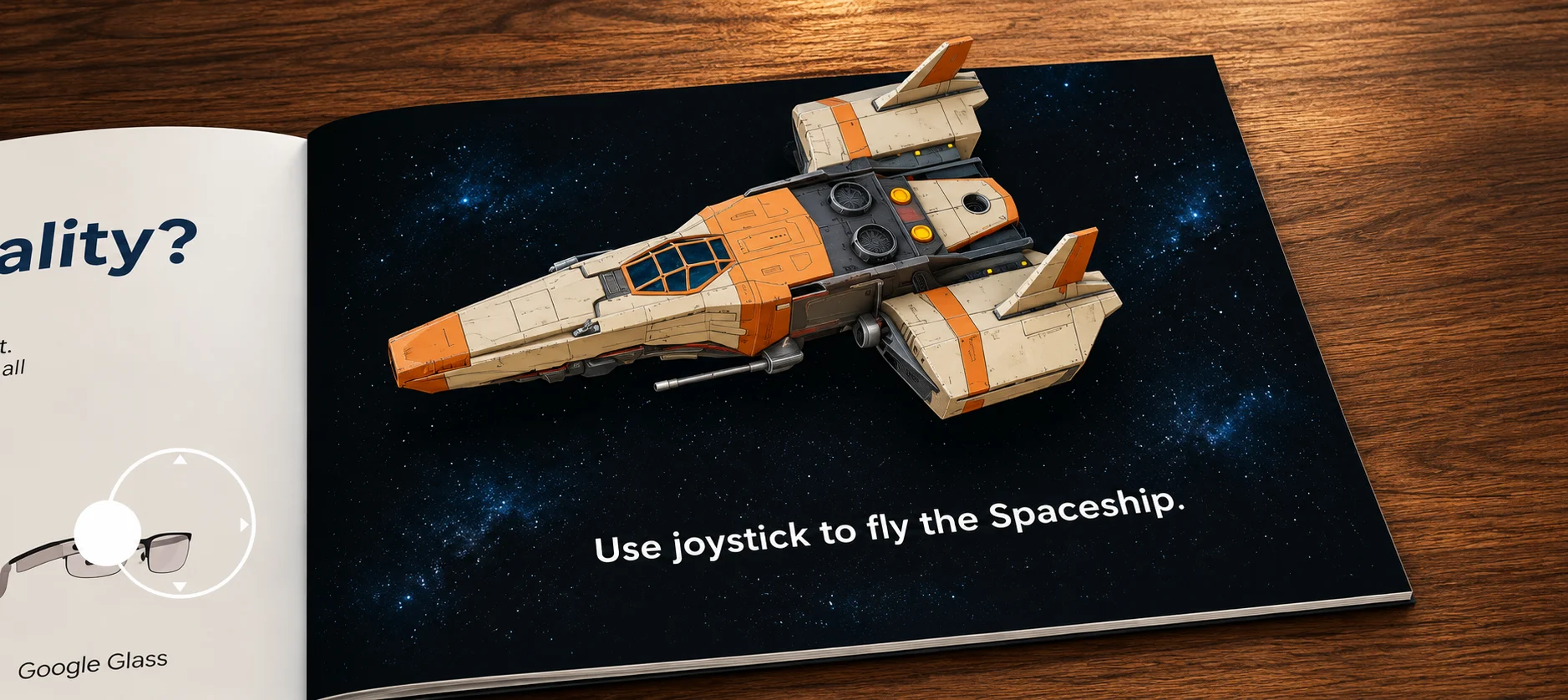
Rather than explaining XR through long articles or technical language, I designed a playful printed book that combines visual storytelling with augmented reality interactions. Users scan selected pages to unlock immersive AR scenes that demonstrate XR concepts in real space.
The goal was to make emerging technology feel accessible, intuitive and enjoyable to explore.
Process
Problem Framing. Defined the core challenge: explaining XR in a way that feels approachable for complete beginners without relying on jargon or technical explanations.
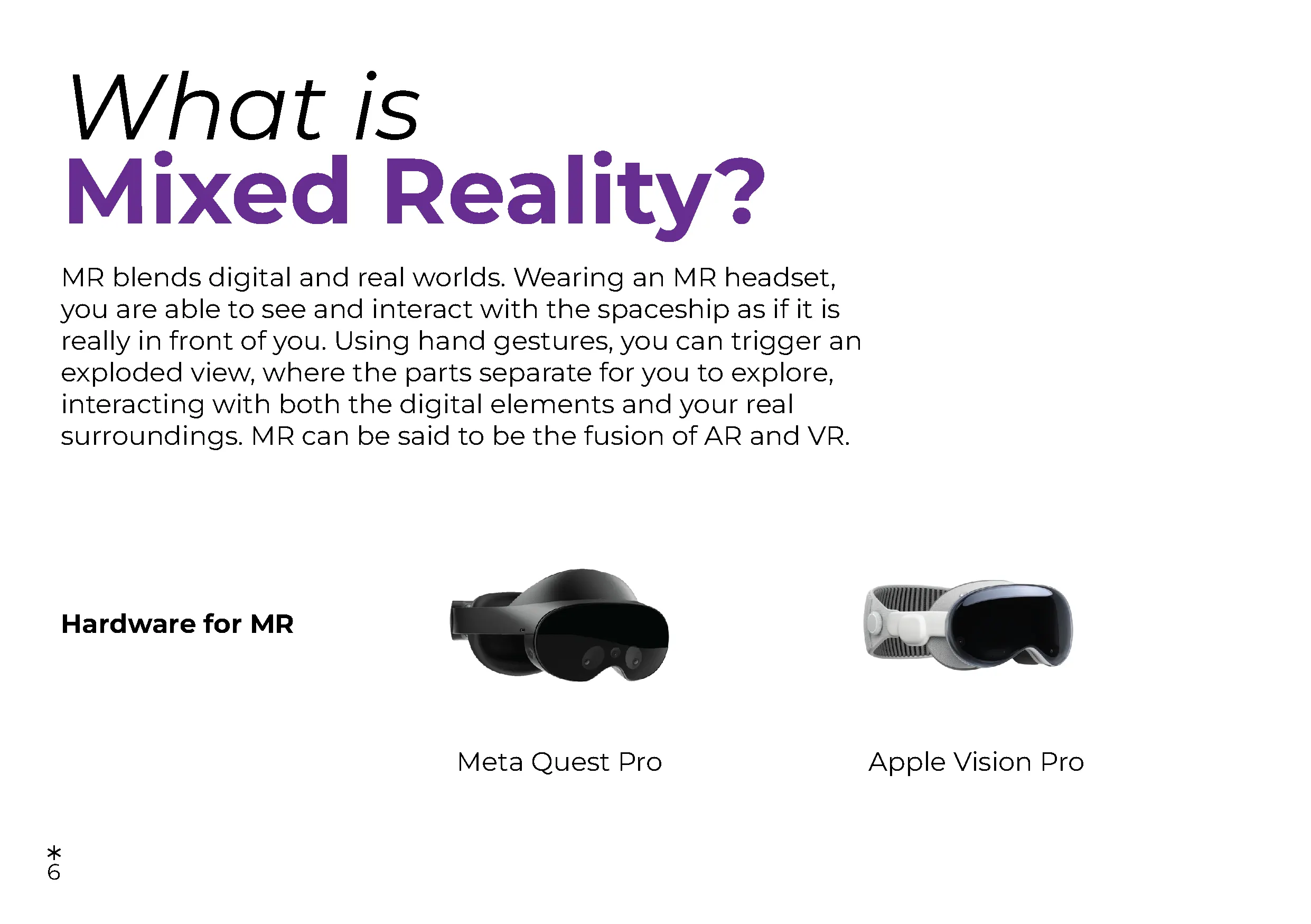
Content Strategy. Structured the experience around the three core XR categories—AR, VR, and MR—breaking each into simple, digestible concepts that could be understood visually.
Print Experience Design. Designed a minimal printed book using clear layouts, illustrations, and concise content to keep learning lightweight and approachable.
AR Interaction Design. Created interactive AR moments triggered by scanning specific pages. Each experience extends the printed content into spatial interaction, allowing users to experience the concept rather than just read about it.
Prototyping & Development. Built the AR prototype in Unity using image tracking to connect physical pages with digital content and interactive scenes.
Solution
The final outcome is an interactive educational book that teaches XR through Augmented Reality; blending physical media with immersive technology to create a playful and accessible learning experience.
Beginner-Friendly Experience. Designed for all ages and levels of familiarity from children and students to adults discovering immersive technology for the first time.
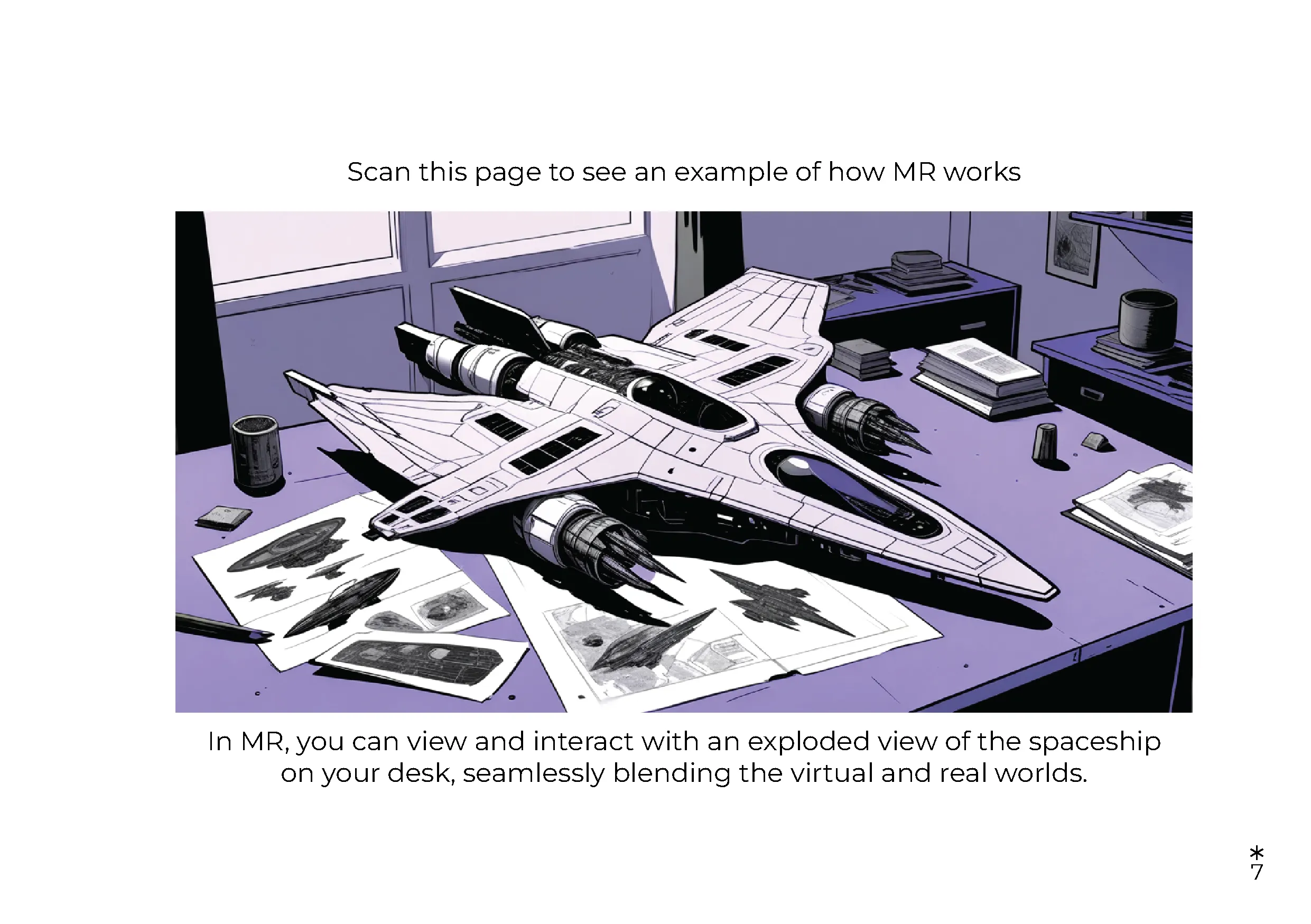
Interactive Concept Visualization. Scanning pages unlocks AR scenes that demonstrate key XR ideas in the user’s physical environment, transforming explanation into interaction.
Accessible Design Approach. Focused on clarity, simplicity, and curiosity—making advanced technology feel less intimidating and more playful.
Insights
- Physical and digital media can complement each other to create richer learning experiences.
- Simplicity often improves engagement more than feature richness.
- AR is most effective when it reinforces content rather than distracting from it.